Support Your Yard Where It Slopes
Retaining wall installation that addresses grading and drainage challenges for homes in Stuart, Florida.
If you own a home in Stuart with a sloped yard, you already know how water runs downhill after every storm and how challenging it can be to use certain areas of your property. Retaining walls create usable flat space while redirecting water away from vulnerable areas like your foundation or driveway. Cobblestone Pavers And Hardscapes LLC builds walls engineered for long-term stability, using materials and methods suited to the soil and drainage conditions common across Stuart.
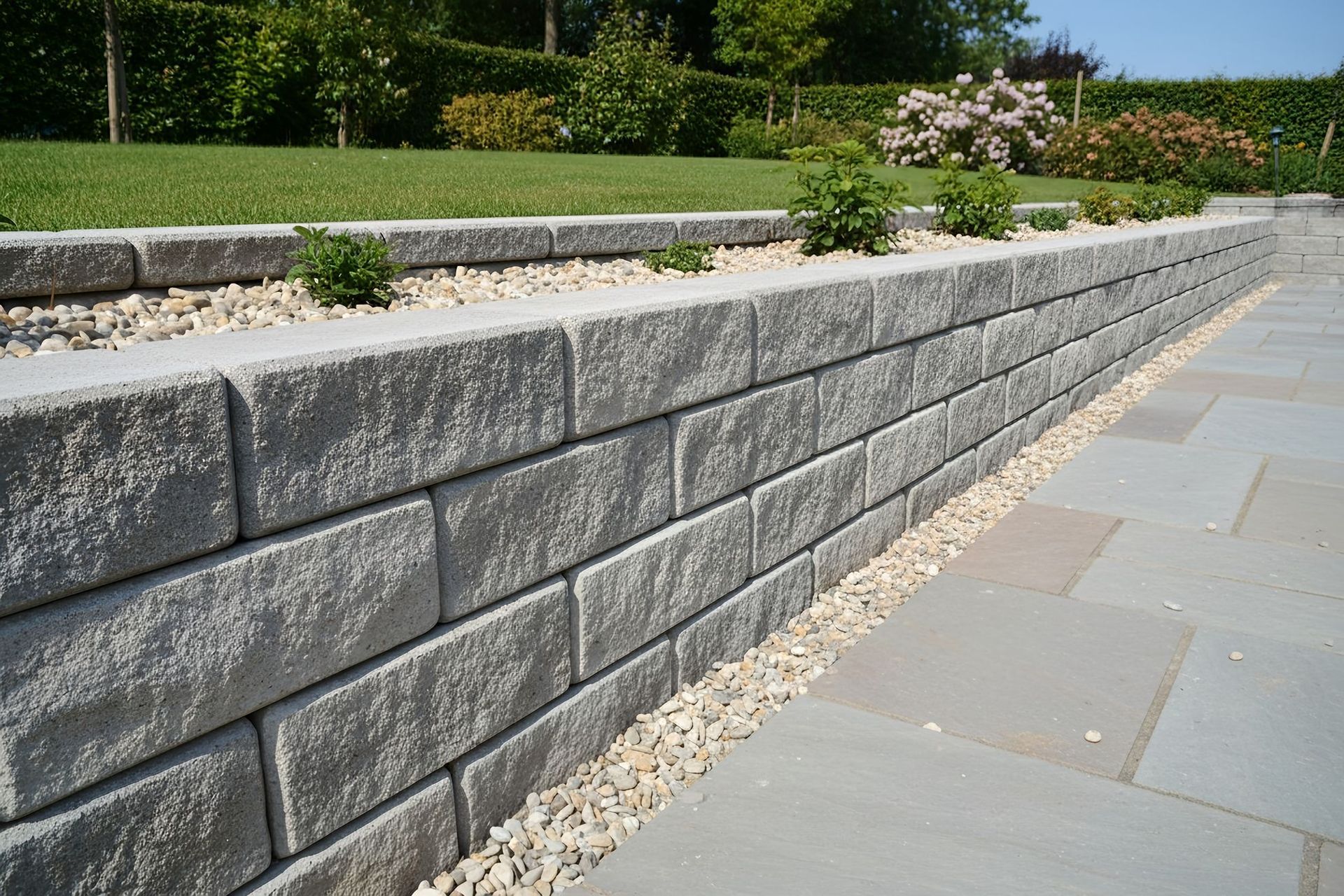
A retaining wall does more than hold back soil. It manages elevation changes and defines the shape of your outdoor space. You can use one to prevent erosion along a hillside, create level planting beds, or expand your patio area where your yard naturally slopes. Each wall is built with reinforcement and proper drainage components to handle the weight and water pressure behind it. Your installation may include decorative stone facing or a simpler block finish depending on your preference and budget.
If you are dealing with erosion or grading concerns in Stuart, reach out to discuss how a retaining wall can stabilize your yard and open up more usable space.
How the Wall Gets Built and Secured
Building a retaining wall in Stuart starts with excavation and base preparation. The crew digs to stable soil, lays a compacted gravel base, and installs drainage pipe behind the wall to prevent water buildup. Each course is leveled and pinned or interlocked depending on the block system used. You will see the wall rise in layers until it reaches the planned height, with each row slightly stepped back for structural strength.
After the wall is complete, the space behind it is backfilled with gravel and soil. The area in front is graded smooth, and any cap stones or decorative facing are set in place. You will notice that water no longer pools along the slope and that the newly leveled area stays firm and stable after rain. The wall holds the soil in place without bowing or shifting because it was engineered for the load it carries.
Your wall may also include lighting, steps, or planting pockets depending on your layout. Some walls are purely functional while others serve as landscape features that define garden beds or seating areas. Installation time depends on wall height and site access, but most residential projects are completed within a few days. The finished structure provides both visual definition and practical support for years without requiring maintenance beyond occasional rinsing.
Questions people ask before they build
Homeowners in Stuart often have similar questions about retaining walls before they commit to construction, especially if they have never worked with one before or are unfamiliar with what is involved in the permitting and design process.
If your property in Stuart has elevation changes that make it hard to use or maintain, Cobblestone Pavers And Hardscapes LLC can assess your grading and recommend a retaining wall design that fits your yard and your goals. Contact us to schedule an evaluation and discuss how a properly built wall can give you more usable outdoor space.